

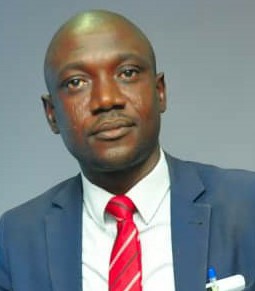
By Mike Adeyemi
As an avid patriot and a journalist who believes strongly in the responsibility of the media to interrogate power with facts, I have watched with some concern the noise surrounding President Bola Ahmed Tinubu’s absence from the 81st United Nations General Assembly (UNGA) in New York.
One cannot help but ask: when did legitimate scrutiny of government become so intertwined with partisan emotion that even an international diplomatic engagement is reduced to political theatre?
President Tinubu will not be physically present at this year’s UNGA, but Nigeria is not absent. Vice-President Kashim Shettima is leading a high-level Nigerian delegation and is scheduled to deliver Nigeria’s national statement while participating in high-level meetings and bilateral engagements. The Federal Government has consequently stated that Nigeria is fully represented at the Assembly.This simple fact ought to provide the starting point for a sober national conversation.
The United Nations General Assembly is not merely a ceremonial gathering where presidents assemble for photographs, exchange handshakes and deliver speeches. It is the principal deliberative and policymaking organ of the United Nations, bringing together all 193 member states to deliberate on matters ranging from peace and security to development, climate change, health, international cooperation and the UN budget.
The 81st session, whose theme is “Restoring Trust, Managing Transformation: A United Nations That Delivers for All,” is addressing a wide range of pressing global challenges. The high-level general debate runs from September 22 to 28, 2026.So, why have we turned the President’s absence into such an extraordinary national controversy?
Certainly, Nigerians have every constitutional and civic right to ask why their President is not personally attending an important international engagement. Such questions are legitimate. Indeed, accountability is one of the reasons the media exists. But there is a difference between asking legitimate questions and manufacturing conclusions before facts are established.
I have been particularly disturbed by narratives suggesting that President Tinubu stayed away from New York because he was afraid of sitting beside United States President Donald Trump, or because he feared arrest over the long-running controversy surrounding his 1993 forfeiture of funds in the United States.These are serious claims and should not be treated as established facts.
The available record shows that the United States matter has generated legal proceedings and public controversy for years. In 1993, Tinubu forfeited $460,000 to the US government in a civil forfeiture proceeding connected to a wider narcotics investigation. Subsequent FOIA litigation has also involved records relating to investigations by US agencies. However, available reporting establishes an important distinction: Tinubu was not criminally convicted in that matter, and the 1993 forfeiture proceeding was civil in nature. That distinction matters.
Journalism should be built around evidence, not insinuation. An allegation is not a conviction. An investigation is not a conviction. A civil forfeiture proceeding is not, by itself, a criminal conviction..If there is evidence that President Tinubu stayed away from the UNGA because he feared arrest, let that evidence be produced. If there is no such evidence, why should responsible commentators turn speculation into a national narrative? This is where the Nigerian media must look inward.
The media is often described as the fourth estate of the realm. We rightly hold public officials accountable. We question their policies, expose their failures and demand explanations when necessary. But who counsels the counsellor? If we demand ethical conduct from those in public office, should we not equally demand professional discipline from ourselves?
Our profession carries enormous power. A newspaper headline, television commentary, radio discussion or social-media post can shape public perception within minutes. That power must therefore come with responsibility. Sadly, our public discourse has increasingly become overwhelmed by emotion, partisan calculations, sensationalism and what can only be described as political shenanigans. We appear to have reached a point where almost every national issue must be interpreted through the prism of political affiliation.Why?
Must everything in Nigeria be APC versus PDP, government versus opposition, supporter versus critic?
Even when the subject is Nigeria’s participation in a global diplomatic forum? Perhaps we should also ask a more fundamental question: what exactly do Nigerians expect to gain from the physical attendance of the President at every UNGA?
Previous Nigerian presidents attended the UNGA, including former President Muhammadu Buhari. Yet the ordinary Nigerian still returned home to the same challenges—unemployment, insecurity, inflation, inadequate infrastructure and poverty. This is not an argument against presidential attendance at international engagements. Far from it. Presidential presence can be diplomatically significant, and there may be circumstances in which the personal presence of a president is strategically desirable.But attendance alone should not become the measure of diplomatic success.
What matters ultimately is what Nigeria puts on the table, what agreements are reached, what investments are attracted, what diplomatic relationships are strengthened and what tangible benefits accrue to Nigerians.
If the Vice-President is in New York leading the Nigerian delegation, delivering the national statement and holding bilateral engagements on behalf of the country, then our conversation should also focus on what he is negotiating and what outcomes Nigeria expects from the engagements.That is where journalism should be directing its energy.
Instead of obsessing over whether the President is physically seated in the UN General Assembly Hall, why not ask what Nigeria’s delegation is doing for the country’s economic and diplomatic interests? Why not interrogate Nigeria’s position on global security, climate change, artificial intelligence, development financing, trade, investment and Africa’s representation in global institutions?These are the issues that deserve serious national attention.
The tendency to malign our own country before the international community is another disturbing development. Criticism of government is not the same thing as denigrating Nigeria. We must learn to separate the two. A government can be criticised without Nigeria being ridiculed. A president can be questioned without the country being portrayed as a laughing stock. An administration can be challenged without every allegation against its officials being presented as established fact.
Indeed, patriotism does not mean refusing to criticise government.Patriotism means being sufficiently concerned about the country to ensure that criticism is anchored in facts, responsibility and a genuine desire for improvement. There is nothing wrong with asking President Tinubu why he chose not to attend the UNGA personally. There is also nothing wrong with demanding greater transparency from the Presidency. But such questions must be asked with decorum.
The media must not surrender its gatekeeping responsibility to the demands of partisan politics or the appetite for sensational headlines.We are not merely commentators. We are custodians of public information.The founding fathers of our nation may not have left us a perfect country, but they left us a country whose dignity should matter to all of us. Our education, professional standing and access to information should make us more discerning, not more susceptible to rumours and political propaganda.
Perhaps the time has come for us to rediscover the difference between criticism and condemnation, investigation and conviction, opposition and patriotism, and facts and political rhetoric..Nigeria has enough genuine problems demanding our attention. Let us debate those problems.Let us question those in authority.Let us demand accountability. But let us do so with facts, restraint and a sense of national responsibility.
The President’s absence from the UNGA may be questioned. His administration may be criticised. His policies may be interrogated.But let us leave politics to the politicians and journalism to journalists..Above all, let us put Nigeria first.
God bless Nigeria.
Mike Adeyemi is a journalist. He writes from Ilorin -Kwara State