

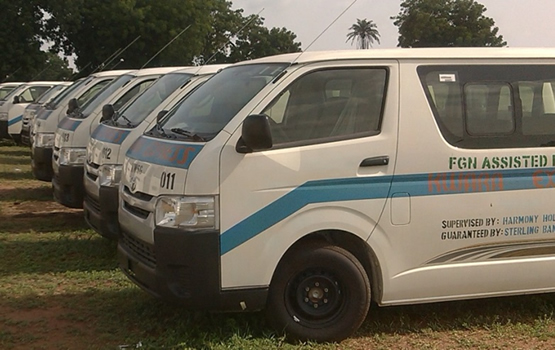
By Mike Adeyemi
Once upon a time, there was a transport system that gave Kwara State a distinctive identity and offered its people an affordable means of moving across the state and beyond. It was called Kwara Express.
Initiated during the administration of the Governor Shaaba Lafiagi, Kwara Express grew into a household name in the state’s transportation sector. Its operations extended across the length and breadth of Nigeria, connecting Kwara towns and communities with major cities and commercial centres across the country.
For many Kwarans, Kwara Express was more than just a means of transportation. It was a symbol of collective pride. It offered commuters an organised and relatively affordable alternative at a time when public transportation was less burdensome on the pockets of ordinary Nigerians.
Families, students, traders, civil servants and other travellers relied on its services to move from one destination to another.
Indeed, there was a time when travelling with Kwara Express was part of the experience of being a Kwara citizen. Its buses were familiar sights on major highways, and its name resonated far beyond the boundaries of the state.
But like many public institutions that once flourished, the story gradually changed.
Amid the glory came a steady decline in operations. Across successive administrations, the once vibrant transportation system began to lose its relevance and operational strength. Buses became fewer, services deteriorated and, eventually, what was once an important component of the state’s public transportation architecture became largely moribund.
The question that naturally arises is: what happened to Kwara Express?
Was it a question of poor management? Inadequate investment? Government’s changing priorities? Maintenance challenges? Or the cumulative effect of several years of neglect?
Whatever the answers may be, one thing remains clear: a public asset that once served generations of Kwarans should not simply be allowed to disappear into the pages of history without a serious attempt to understand what went wrong and whether it can be restored.
This is particularly important at a time when Nigerians are grappling with rising transportation costs and the broader effects of economic hardship. The high cost of Premium Motor Spirit (PMS), among other factors, has significantly affected the cost of moving people and goods.
For ordinary citizens, transportation is not a luxury; it is an essential part of everyday economic life.
It is therefore worth considering whether the revival of Kwara Express could form part of a broader strategy to provide affordable and efficient public transportation for the people of the state.
The present administration of Governor AbdulRahman AbdulRazaq has, in recent years, undertaken various interventions across different sectors of the state. Against that background, the revival or transformation of Kwara Express could be explored as another avenue for improving the welfare of residents, particularly workers, students, traders and other low- and middle-income commuters.
This should not necessarily mean returning to the old model. The world has moved on, and transportation systems have evolved. A revived Kwara Express could operate under a modern business model, with new buses, proper maintenance systems, digital ticketing, professional management, strategic routes and appropriate partnerships with the private sector.
The objective should be to preserve the heritage while embracing modernity.
Kwara State does not necessarily have to reinvent the wheel. The history of Kwara Express provides a foundation upon which a new, efficient and sustainable public transportation system can be built.
There is also a cultural dimension to this.
Some institutions become part of the collective memory of a people. Kwara Express is one of them. It reminds older generations of a period when public transportation was not merely a commercial enterprise but also a public service that connected communities and facilitated economic activities.
Such heritage should not be abandoned without a second thought.
The revival of Kwara Express, if properly conceived and sustainably managed, could therefore achieve more than putting buses back on the roads. It could restore a part of Kwara’s institutional heritage, create employment, support commerce, improve mobility and provide commuters with an additional affordable transportation option.
The challenge, however, is sustainability. Any attempt at revival must avoid the mistakes that may have contributed to its decline in the first place. There must be transparency, professional management, proper vehicle maintenance, realistic pricing, accountability and a clear long-term financial model.
Government could also examine public-private partnership arrangements that would bring in technical expertise and investment while retaining the public-interest objective of the scheme.
After all, development is not only about building new things. Sometimes, it is also about looking back at what once worked, understanding why it stopped working and asking whether it can be rebuilt better.
Once upon a Kwara Express, there was a transport system that inspired pride among Kwarans and connected the state to the rest of the country. Perhaps the time has come to tell a new chapter of that story—not as a nostalgic remembrance of what once was, but as a deliberate effort to transform an old heritage into a modern transportation solution for a new generation.
Our heritage of pride deserves more than memories. It deserves a second look.
Mike Adeyemi is a journalist. He writes from Ilorin -Kwara State